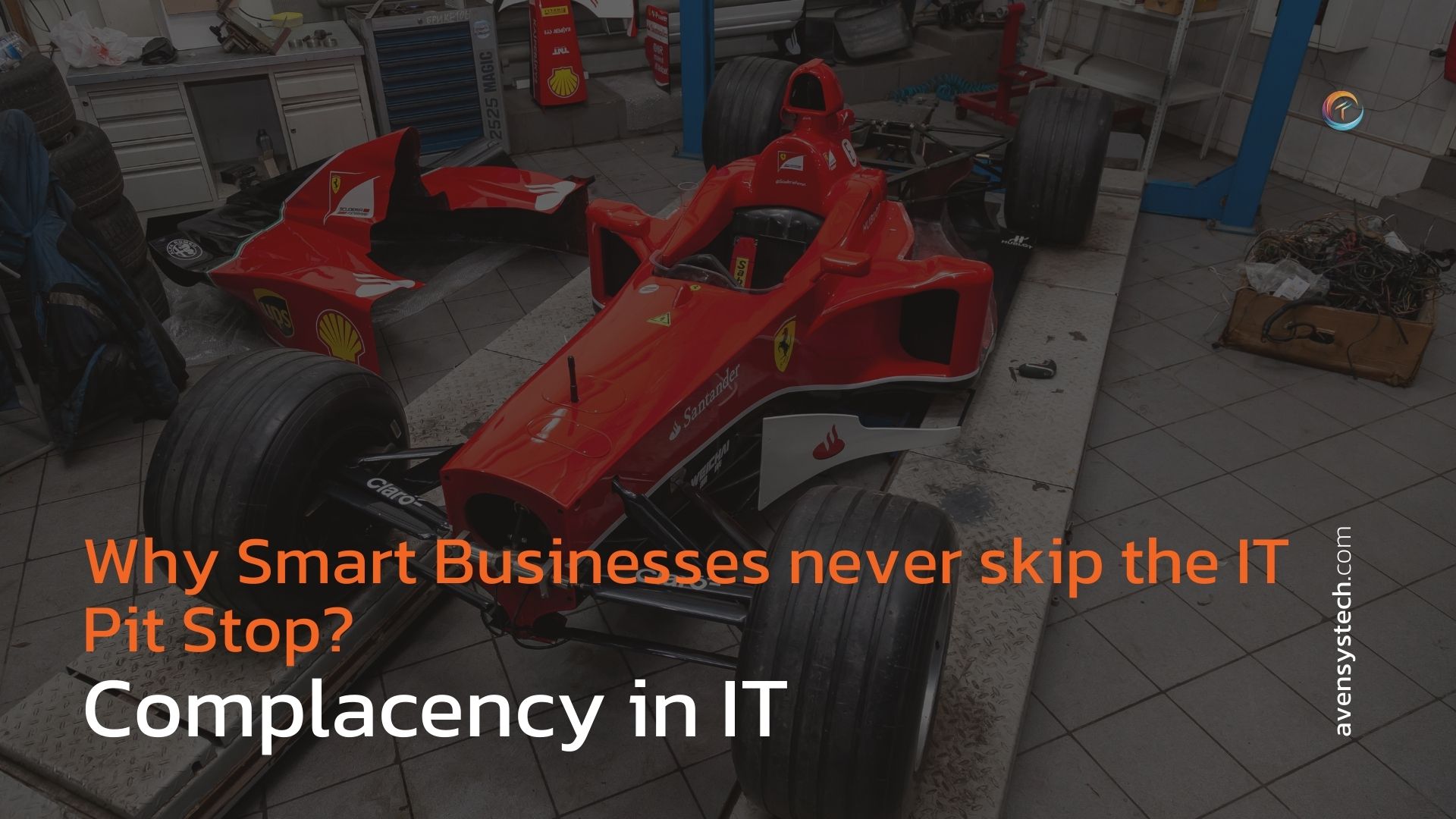
Smart Businesses are Complacent.
Ever watched a pit stop in Formula 1?
Blink and you miss it.
Four tyres off.
Four tyres on.
Adjustments made.
Car dropped.
Gone in under three seconds.
It looks effortless.
But what you’re seeing isn’t speed.
It’s preparation.
Behind that moment is choreography, planning, practice, data analysis, and relentless repetition.
Every person in that crew knows exactly what they’re responsible for.
They’ve rehearsed it hundreds of times.
Because in a sport measured in thousandths of a second, hesitation costs positions.
Business IT isn’t as dramatic.
But the principle is the same.
Technology doesn’t pause.
New vulnerabilities appear daily.
Updates roll out constantly.
Platforms evolve.
Regulations change.
Threat actors adapt.
Keeping up with IT is like operating in a permanent race environment.
There’s no “quiet season”.
No point where you can safely say, “Let’s leave it for a bit.”
If you stay sharp, patch systems, review configurations, test backups, refine policies, train users, you maintain momentum.
You stay competitive.
But if you delay…
“Let’s skip this update.”
“We’ll review that policy next quarter.”
“We’ve never needed MFA before.”
That’s the equivalent of telling the driver to skip the pit stop.
In Formula 1, a pit stop costs around 20–25 seconds of race time.
On paper, that feels painful.
Why stop when the car is still moving?
But staying out on worn tyres is worse.
Grip drops.
Lap times slow.
The risk of a blowout increases.
One mistake and you’re in the barrier.
In IT, maintenance feels like the same kind of “lost time”:
None of it feels urgent when things are working.
It interrupts routine.
It costs money.
It’s not glamorous.
But skipping it?
That’s technical debt building up lap after lap.
Even elite teams fumble pit stops.
A sticky wheel nut.
A delayed release.
A human mistake.
It happens.
But they still stop.
Because running on destroyed tyres guarantees you’ll fall backwards.
The same applies to IT leadership.
Slowing down to reassess architecture, improve governance, invest in training, or strengthen security controls can feel like you’re losing ground.
You’re not.
You’re protecting long‑term performance.
In racing, complacency kills momentum.
In business IT, complacency creates exposure.
You hear it everywhere:
“We’ve never had a breach.”
“Our setup works fine.”
“We’re too small to be targeted.”
That’s the equivalent of ignoring tyre wear data because the car still feels okay.
Until it doesn’t.
Most breaches don’t happen because someone did something dramatic.
They happen because nothing was done for too long.
Skipped updates.
Permissions that drifted.
Accounts left active “just in case”.
Security controls added later, if ever.
Nothing broken.
Just neglected.
This is the part that catches growing businesses out.
IT complacency rarely looks like negligence.
It looks like practicality.
You’re busy.
The team is stretched.
Clients come first.
IT “basically works”.
So, maintenance slides.
Updates wait.
Reviews drift.
Decisions get postponed.
And slowly, risk builds up in the background.
Not because anyone ignored IT.
But because no one owned it properly
Small and mid‑sized businesses operate in a tough space.
You’re big enough to be targeted.
But not always big enough to have dedicated IT leadership.
That’s where risk hides.
Licences stack up quietly.
Old accounts remain active.
Security decisions get made reactively.
Processes rely on trust instead of structure.
And when something finally does go wrong, the cost isn’t just technical.
It’s downtime.
Lost trust.
Disrupted teams.
Emergency spend.
That’s not bad luck.
That’s deferred maintenance catching up.
The organisations that stay competitive do this differently
The businesses that handle IT well don’t treat it as a collection of tools.
They treat it as a discipline.
Like a pit crew.
Structured.
Proactive.
Rehearsed.
They don’t wait for problems to prove a point.
They build habits that prevent them.
They review access before it becomes a risk.
They patch before something breaks.
They test before they need the test to work.
They understand that boring IT is healthy IT.
Modern platforms are powerful.
Microsoft 365, cloud tools, AI workflows, they enable speed and flexibility.
But they also move the responsibility.
Security is no longer a single switch.
It’s a set of ongoing decisions.
Who has access?
From where?
On what device?
Under what conditions?
Those answers change as your business grows.
Ignoring them doesn’t freeze risk.
It lets it drift.
Security threats evolve.
Microsoft releases changes.
Compliance frameworks shift.
User behaviour changes.
Devices multiply.
AI reshapes workflows.
The pace doesn’t slow because you’re busy.
The organisations that accept this and build IT practices that keep up, stay competitive.
The ones that avoid the pit?
They don’t just stand still.
They get overtaken.